The Key Difference
Compostable means a product breaks down under specific composting conditions (typically industrial facilities with 140-160°F sustained heat) within a defined timeframe, leaving nutrient-rich compost.
Biodegradable means a material breaks down through biological processes in various natural environments. Paired with a specific test standard and timeframe (for example, "biodegradable per ASTM D6691 in marine environments within 6 months"), this gives clear, verifiable performance expectations.
The real question. Does your community have industrial composting facilities? If not, biodegradable materials tested for soil, marine, or landfill conditions may be more practical than "compostable" materials that need infrastructure you don't have.
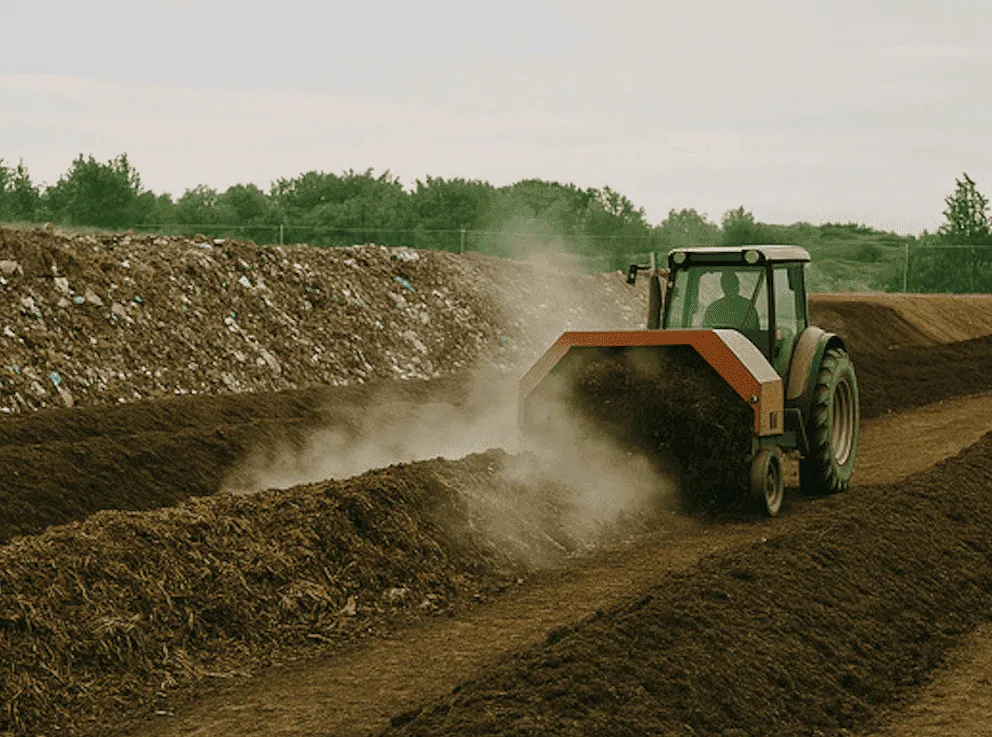
Composting field
What "Compostable" Really Means
The Industrial Composting Requirement
"Compostable" usually refers to industrial composting standards like ASTM D6400 or EN 13432, which require:
- High sustained temperatures. 140-160°F for weeks.
- Controlled conditions. Specific moisture, oxygen, and microbial activity.
- 180-day timeframe. 90% or more of the material has to biodegrade.
- Commercial facilities. These conditions rarely exist outside industrial operations.
The Infrastructure Problem
Here's the catch. Most communities lack industrial composting facilities. Industry data shows:
- Only about 25-30% of Americans have access to commercial composting
- Many facilities don't accept compostable packaging, only food waste
- Without proper infrastructure, "compostable" products end up in landfills
- In landfills, compostable materials don't break down as designed
Bottom line. A product being "compostable" only delivers environmental benefit if it actually reaches an industrial composting facility and gets accepted there.
Lab Testing vs Certification
Products can meet compostability standards through:
- Laboratory test reports. Accredited labs test products to ASTM D6400 or EN 13432 and provide documentation.
- Third-party certification. Organizations like BPI or TÜV Austria review lab reports and issue certifications, which adds cost and time.
Both paths require the same lab testing. Lab-verified products meet the same standards as certified ones. Certification just adds a third-party review layer some businesses use for marketing.
What "Biodegradable" Really Means
The Good. Biodegradable with Test Standards
Properly tested biodegradable materials spell out exactly how, where, and when they break down. Examples:
- ASTM D5511. Anaerobic biodegradation in landfill conditions, where most waste actually ends up.
- ASTM D6691. Marine biodegradation. Breaks down in ocean water if accidentally littered.
- ISO 17556. Soil biodegradation. Breaks down when buried in soil.
- ASTM D5338. Aerobic biodegradation. Breaks down in composting-like conditions.
Why this matters. These standards test biodegradation in environments that exist and are accessible. You don't need special facilities. The materials work where waste naturally ends up.
The Bad. Vague "Biodegradable" Claims
Without a specific test standard and timeframe, "biodegradable" is meaningless. Watch for:
- No test standard mentioned. How do they know it biodegrades?
- No timeframe specified. Could take 1 year or 100 years.
- No environmental conditions stated. In what conditions does it break down?
- "Oxo-degradable" plastics. These just fragment into microplastics. Banned in the EU.
Always ask. "What test standard proves this claim, and what's the timeframe?" Legitimate suppliers will have lab reports ready.
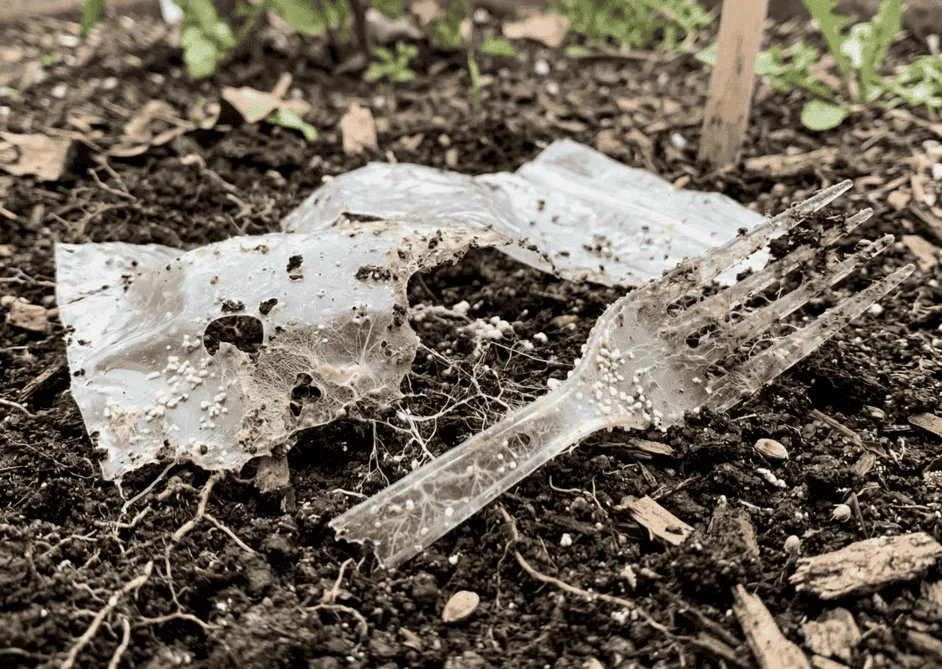
Biodegradation in soil
Comparing the Standards
| Feature | Compostable (ASTM D6400) | Biodegradable with Test Standards | Vague "Biodegradable" |
|---|---|---|---|
| Environment Required | Industrial composting (140-160°F) | Specified (landfill, soil, marine, etc.) | Unspecified |
| Infrastructure Needed | Industrial facility (limited availability) | Natural environments (widely available) | Unknown |
| Timeframe | 180 days | Specified per test (varies by environment) | Unspecified |
| Testing Required | Yes, lab verification | Yes, lab verification to specific standards | Unknown |
| Practical Accessibility | Low (25-30% of US has access) | High (works in natural environments) | Unknown |
| Microplastics | Zero if properly composted | Zero if properly tested material | Risk if oxo-degradable type |
Different Biodegradation Standards
ASTM D5511. Anaerobic Landfill Biodegradation
- Environment. Anaerobic (no oxygen) conditions like actual landfills.
- Why it matters. This is where most waste actually ends up.
- Practical benefit. Materials break down even if commercial composting isn't available.
- Timeframe. Varies by material, measured in months to years.
ASTM D6691. Marine Biodegradation
- Environment. Ocean water conditions.
- Why it matters. If waste reaches waterways, it breaks down rather than persisting.
- Practical benefit. Environmental safety net for coastal areas.
- Materials. PHA is marine biodegradable. PLA is not.
ISO 17556. Soil Biodegradation
- Environment. Soil conditions (buried in ground).
- Why it matters. Works in agricultural settings or land applications.
- Practical benefit. Accessible for farms, gardens, and rural areas.
- Timeframe. 6-24 months depending on material and soil type.
ASTM D6400. Industrial Composting
- Environment. Industrial composting facilities (140-160°F).
- Why it matters. Fastest breakdown. Creates usable compost.
- Limitation. Requires access to a commercial composting facility.
- Timeframe. 180 days.
Real-World Examples
Lab-Verified Biodegradable Materials (Look for test reports)
- PLA straws. Lab-tested to ASTM D6400 (compostable) and ASTM D5511 (landfill biodegradable).
- PHA straws. Lab-tested to ASTM D6400, D5511, D6691 (marine), and ISO 17556 (soil).
- Quality paper products. Natural biodegradation with predictable breakdown.
Avoid Vague "Biodegradable" Without Documentation
- "Oxo-degradable" plastics. Fragment into microplastics. Banned in the EU.
- "Biodegradable" without a test standard. No proof of actual breakdown.
- Petroleum plastic with vague claims. May not actually biodegrade.
- "Eco-friendly" without specifics. Marketing language, not verified performance.
Why This Matters for Your Business
Match Materials to Your Infrastructure
If your community has industrial composting. Compostable products (ASTM D6400) are the right fit. They'll actually be composted as designed.
If you don't have access to composting. Materials with broader biodegradation testing (ASTM D5511 landfill, ISO 17556 soil, D6691 marine) deliver environmental benefits even without specialized facilities.
Customer Communication
Be honest about end-of-life options:
- "Lab-tested biodegradable" with specific standards builds credibility
- Don't overpromise on composting if local infrastructure doesn't exist
- Show test reports when customers ask about environmental claims
- Multiple pathways (compostable + landfill biodegradable) show real commitment
Regulatory Compliance
Some jurisdictions have specific requirements:
- California requires compostable certification for certain product claims
- The EU bans oxo-degradable "biodegradable" plastics
- Many cities specify materials for single-use foodware bans
- Always have lab documentation ready to back up your claims
PureStalk Plant-Based Products
PureStalk straws are plant-based and documented environmental claims.
How to Verify Biodegradability Claims
Ask for Lab Test Reports
Legitimate suppliers will provide:
- Accredited lab reports showing specific test standards (ASTM D5511, D6691, ISO 17556, etc.)
- Timeframes and conditions clearly stated in the test results
- Percentage of biodegradation achieved in testing
- Product specifications matching what you're actually buying
Know What Matters to Your Business
A few questions to ask yourself:
- Does my community have industrial composting? (If yes, prioritize ASTM D6400.)
- Will this waste go to landfills? (Look for ASTM D5511 testing.)
- Do we operate near water? (Consider ASTM D6691 marine biodegradation.)
- Do customers have compost bins at home? (Look for home compostable or soil biodegradable.)
Red Flags to Watch For
- "Biodegradable" without naming a test standard
- "Eco-friendly" or "green" without specifics
- "Breaks down naturally" without timeframe or conditions
- "Degrades in landfills" without an ASTM D5511 test report
Different End-of-Life Pathways
Industrial Composting (Best Case, If Available)
- Conditions. 140-160°F sustained heat, controlled moisture and microbes.
- Timeframe. Typically 180 days for ASTM D6400 materials.
- Result. Nutrient-rich compost for agriculture or landscaping.
- Availability. Limited. Only 25-30% of US has access.
- Acceptance. Many facilities only take food waste, not packaging.
Home Composting (Rare but Growing)
- Conditions. Lower temperatures (ambient to 100°F), backyard conditions.
- Timeframe. 12-24 months typically.
- Materials. Limited. Only PHA and some paper products work reliably.
- Look for. TÜV Austria OK compost HOME or equivalent testing.
Landfill Biodegradation (Most Common Reality)
- Conditions. Anaerobic (no oxygen), variable temperature and moisture.
- Timeframe. Varies by material. Test standard ASTM D5511 measures this.
- Materials. PHA and some composites can biodegrade here if formulated properly.
- Reality check. This is where most waste actually ends up.
Soil Biodegradation
- Conditions. Buried in soil, natural microbes.
- Timeframe. 6-24 months typical per ISO 17556.
- Practical for. Agricultural operations, rural areas, gardens.
- Materials. PHA and composites do well here.
Marine Environment
- Conditions. Ocean water, natural marine microbes.
- Timeframe. Varies. Test standard is ASTM D6691.
- Materials. PHA biodegrades in marine conditions. PLA does not.
- Importance. Safety net if waste reaches waterways.
Frequently Asked Questions
Can I throw compostable products in my trash?
You can, but they need the right conditions to biodegrade. If your waste goes to a landfill, look for products tested to ASTM D5511 (anaerobic landfill biodegradation) so they actually break down there.
Are "biodegradable" or "compostable" plastics recyclable?
No. These materials contaminate traditional plastic recycling and have to be sorted out. They're designed for composting or biodegradation, not recycling.
What if my city doesn't have commercial composting?
This is the reality for most places. Materials like PHA with multiple biodegradation pathways (ASTM D5511 for landfills, ISO 17556 for soil, etc.) deliver more practical environmental benefits than compostable-only materials.
How do I know if a supplier's claims are real?
Ask for lab test reports. Legitimate suppliers will provide test reports or documentation showing specific test standards (ASTM D6400, D5511, D6691, ISO 17556, etc.) with results and timeframes. If they can't provide test reports, be skeptical.
Is "home compostable" better than "industrial compostable"?
More accessible, since anyone with a compost bin can use it, but fewer materials qualify. Industrial compostable works faster and for more materials, but requires facility access. Materials tested to multiple standards are the most flexible.
Do compostable products break down in landfills?
It depends. Landfills lack the oxygen and microbial activity of composting facilities, so breakdown is much slower. Materials tested to ASTM D5511 are designed to biodegrade in landfill conditions. Materials only tested to ASTM D6400 may not.
What about PLA vs PHA for biodegradation?
PLA. Works in industrial composting (D6400) and can biodegrade in landfills (D5511) if formulated properly. Does not biodegrade in marine environments.
PHA. Works in industrial composting, landfills, soil (ISO 17556), and marine environments (D6691). More biodegradation pathways, typically higher cost.
Should I trust certification logos or lab reports?
Both are valuable. Certifications (BPI, TÜV Austria) mean an organization has reviewed lab reports and verified claims, which adds credibility but also cost and time. Lab reports alone (from accredited labs) show the same test performance. You're just reviewing the data directly rather than through a third party. Either way, the underlying lab testing is what proves biodegradation.
Key Takeaways
- "Compostable" needs industrial facilities at 140-160°F. Great if you have access. Limited use if you don't.
- "Biodegradable with test standards" (ASTM D5511, D6691, ISO 17556) works in natural environments. More accessible for most businesses.
- Vague "biodegradable" without test standards and timeframes is meaningless. Always ask for lab documentation.
- Match materials to your reality. Choose based on where your waste actually goes, not the ideal scenario.
- Lab verification matters. Accredited test reports prove performance. Certification adds third-party review but isn't required for the material to meet standards.
- Multiple pathways are best. Materials tested to several standards (compost + landfill + soil) deliver environmental benefits regardless of disposal method.